Cricket
- Example game
- Send a soft ball towards a target.
- What children practise
- Aiming, controlling force and coordinating the arm with the rest of the body.
- Where it appears in sport
- These movements are used when throwing during cricket fielding.
 Request a free trial
 Before choosing a sport, children can explore how their bodies move. Through Captain-led games, Baselete helps them practise balance, coordination and control—the foundations they will use across many sports.
Ages 4–6 and 7–9 · Hyderabad
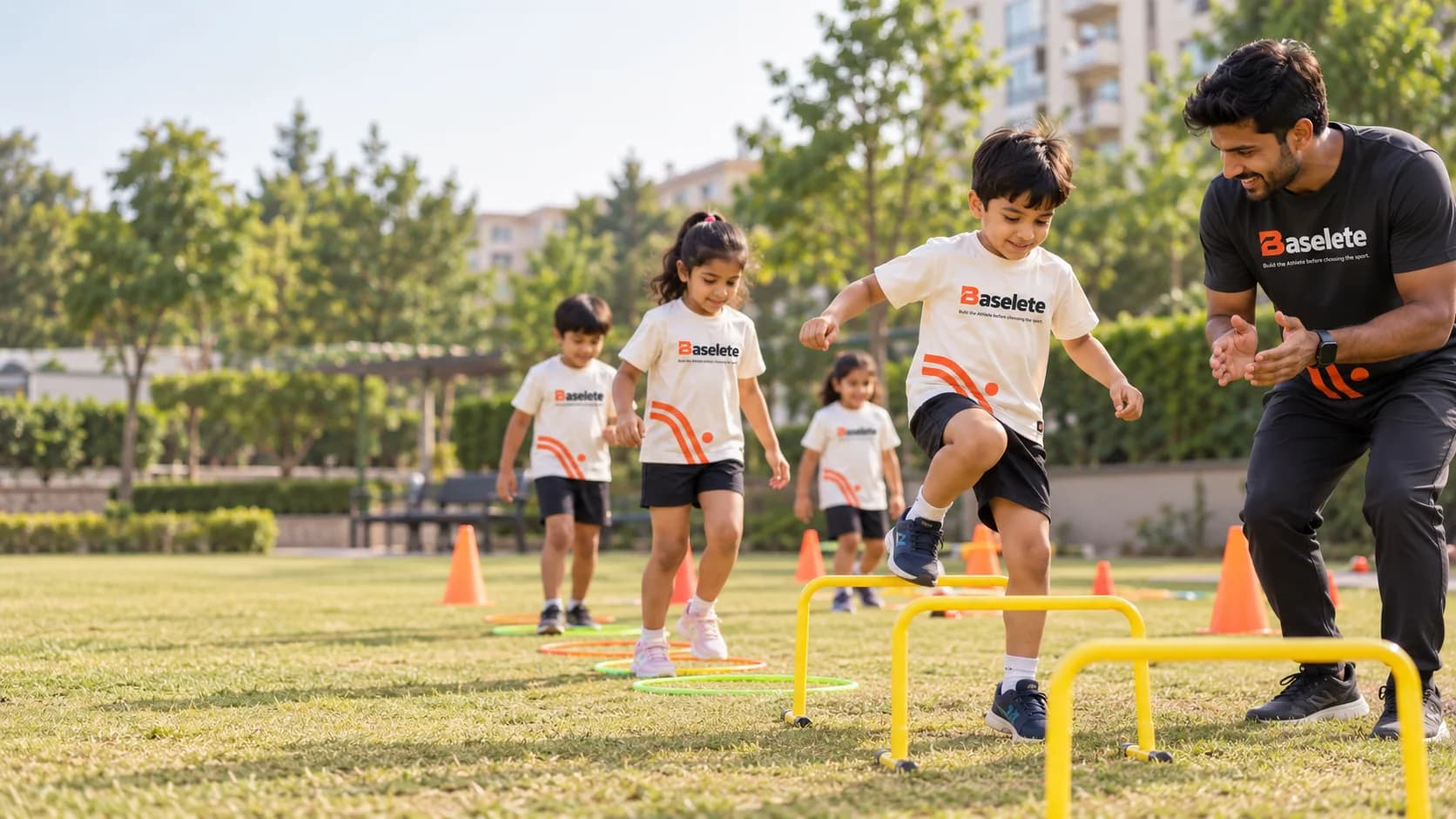
A cricket shot, a badminton rally or a football pass brings several movements together. Baselete gives children opportunities to practise those foundations through play.
Illustrative game examples. Activities vary by session.
Baselete develops movement foundations. Sport-specific coaching teaches the techniques of an individual sport.
Children explore movement through games, demonstrations and challenges, with Captains helping them understand, participate and try again.
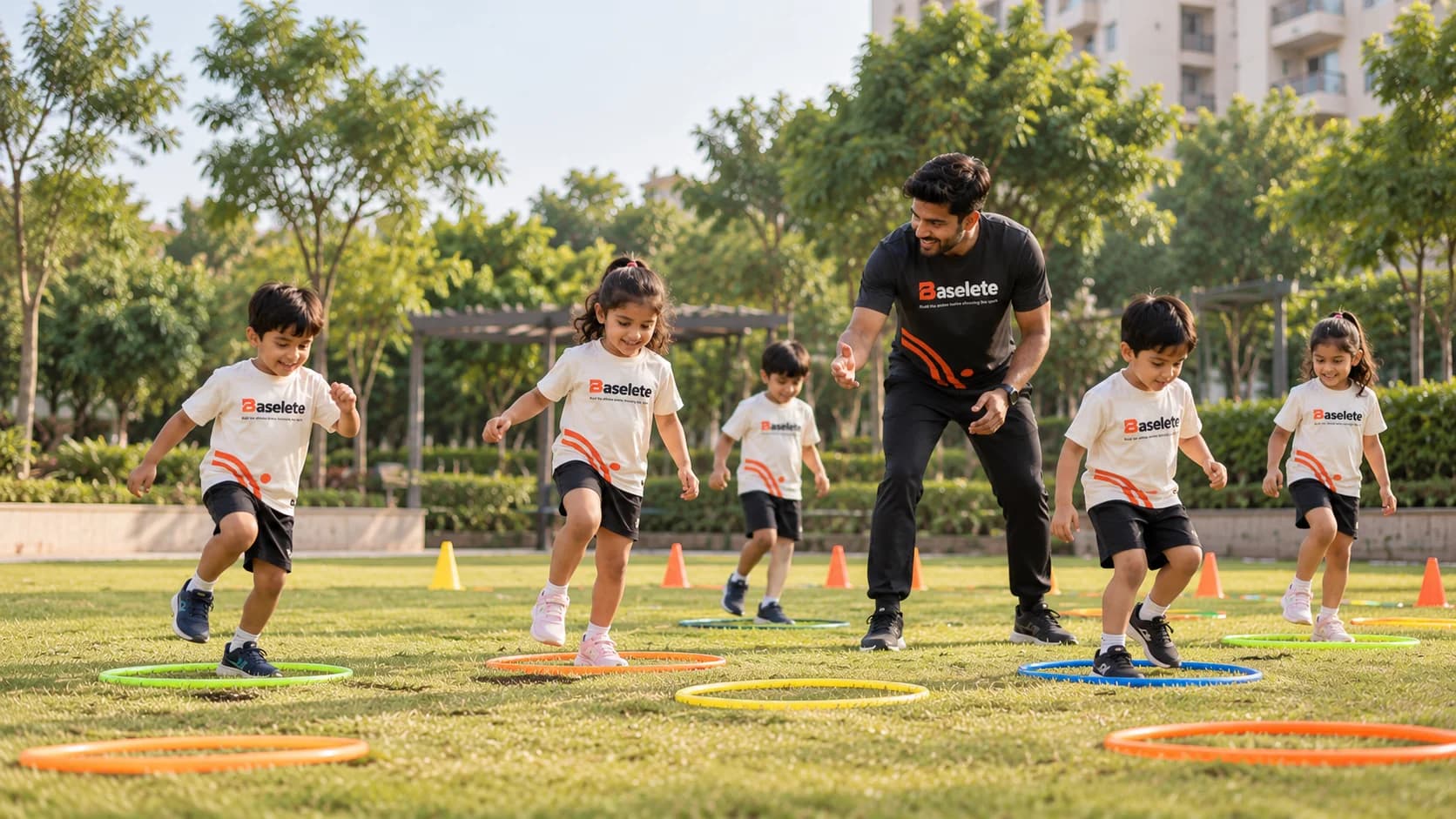
A welcome and playful warm-up help children settle into the session.
Captains demonstrate two movement skills and turn practice into games.
A playful challenge gives children a chance to apply what they have practised.
Stretching and a shared closing bring the session to an end.
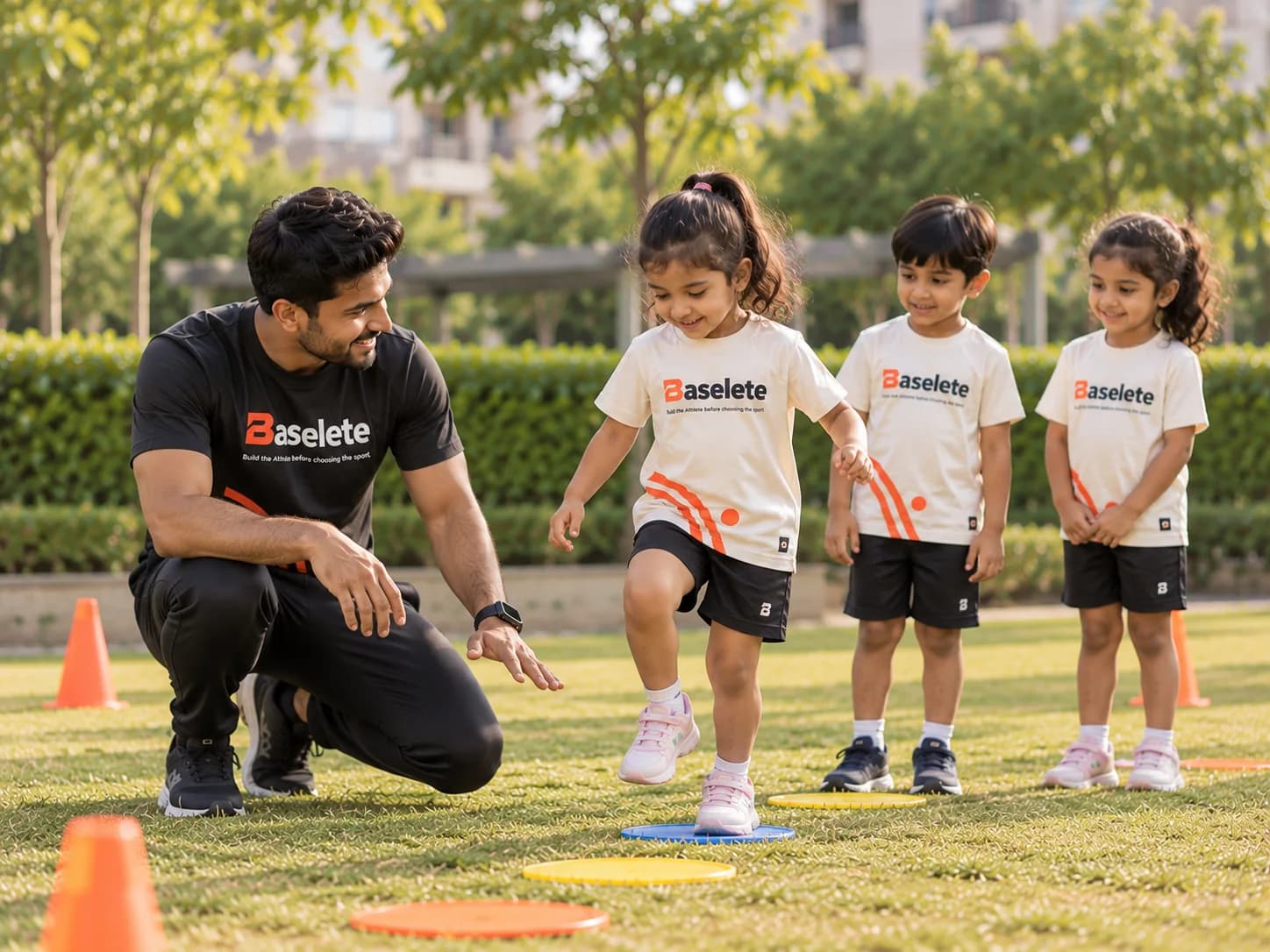
Imaginative games, short demonstrations and simple instructions give younger children opportunities to practise balance, coordination and basic movement control.
A stepping-stone game can involve choosing where to place a foot, holding balance and moving to the next space.
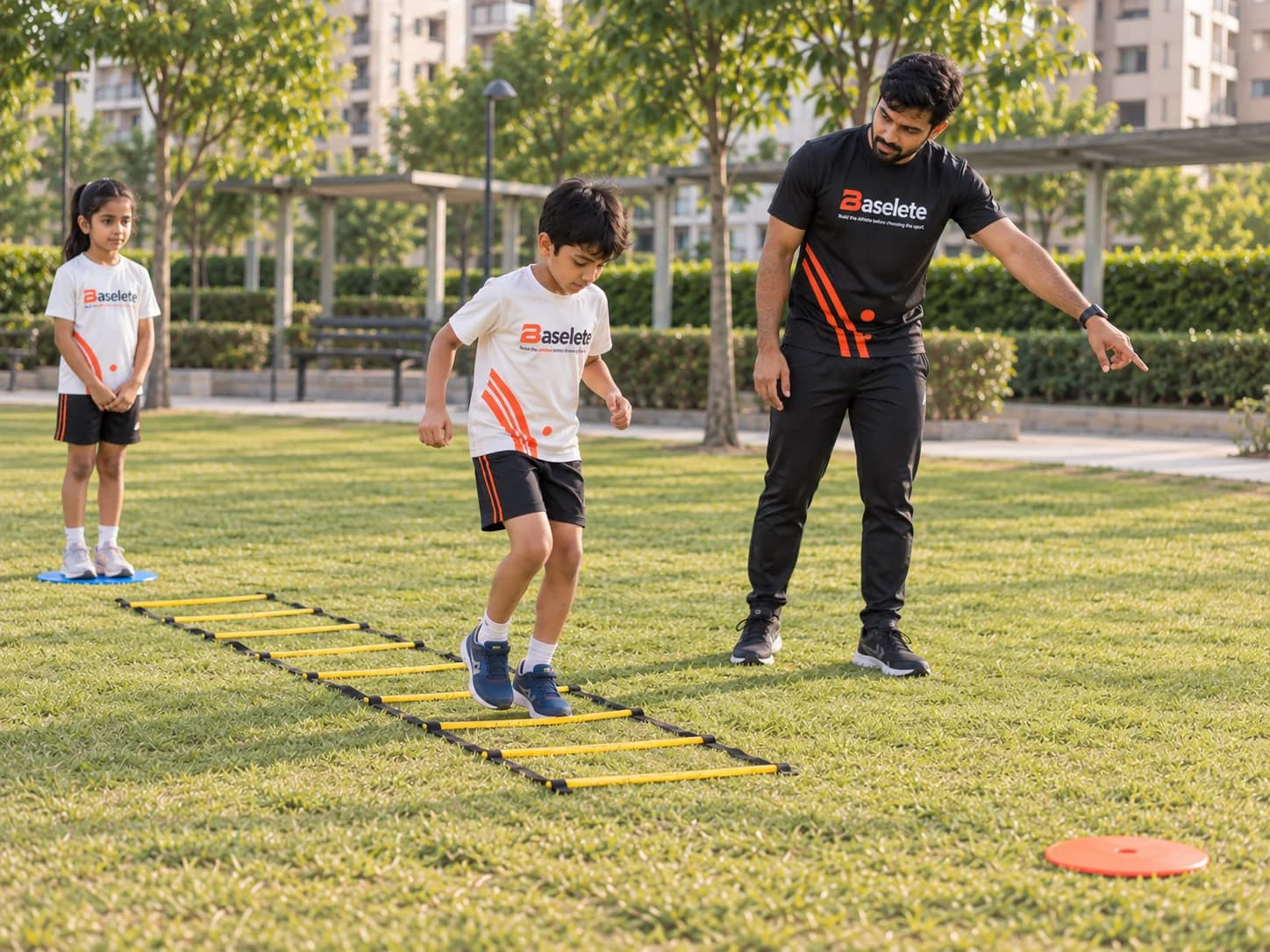
More varied movement combinations, partner activities and changing game rules give older children opportunities to practise control and respond to what is happening around them.
A game can combine moving through markers, responding to a cue and sending a ball towards a target.
Captains adjust instructions and challenges to the children taking part.
A familiar game can change as children become ready for a different challenge.
One throwing game · Illustrative variations
Send a soft ball towards a nearby target.
Move to a marker, become steady, then send the ball towards the target.
Try a different target position or distance, with Captain guidance.
Captains choose variations according to the children taking part. Progress is not a race through stages.
Progress can appear in ordinary moments: a steadier movement, another attempt or greater willingness to join a game.
Children develop at different rates. We observe each child from their own starting point, without public rankings.
Start with a free trial. Afterwards, ask us about the programme, schedule, fees and how we observe progress before deciding about enrolment.
Free trials in Hyderabad, subject to approval and availability. No obligation to enrol.